/feature
Special Economic
Zones Mostly Fail;
The Ones That Don’t Change Everything
These islands of exception will reshape the global economy.
In 2025, Singapore and Malaysia launched a 3,500 kilometer2 special economic zone along Malaysia's southern Johor coast—the most ambitious attempt ever at a jointly administered cross-border zone between two sovereign nations.1 In Somaliland, a territory no UN member state formally recognizes, DP World has sunk over $500 million into the port of Berbera and its surrounding economic zone—a bet that a well-governed zone with strategic port access can attract serious capital even where sovereign legitimacy is disputed.2 Outside Kinshasa, the Democratic Republic of the Congo is planning a city-scale, 430 km2 economic zone—more than half the size of Singapore—designed to capture value from the country's cobalt, copper, and coltan before they leave as raw exports.3
Special economic zones (SEZs)—jurisdictions with distinct regulatory environments, dedicated infrastructure, and unified administration over a geographically delimited area—have been deployed by the majority of countries on earth since the model first emerged in the 1950s. An estimated 7,000 exist worldwide.4 The results follow a brutal power law. Most zones fail or muddle through. A small number change the trajectory of nations. Shenzhen set the stage for the elevation of 800 million Chinese out of poverty.5 The Dubai International Financial Centre turned an Arabic-speaking emirate into a top-ten global financial hub by grafting English common law onto a Sharia jurisdiction.6 The Coyol Free Zone outside San José generates nearly 3% of Costa Rica's entire GDP from a single industrial park.7
These islands of exception have been among the most consequential policy experiments of the last century. The magnitude of those successes so thoroughly dwarfs the cost of the failures that governments keep reaching for the tool—and they are reaching for it now, in new ways and new places, as the fracturing of the postwar order shocks supply chains, elevates new players, and opens ground that legacy institutions are too slow to occupy. The distinction between zones that transform economies and zones that waste public money has rarely mattered more, and the conditions that separate the two are becoming easier to identify.
The Shannon Free Zone is usually recognized as the first modern special economic zone.8 Built in 1959 alongside a western Irish airport that transatlantic flights had recently stopped needing to refuel at, it offered tax breaks on imports, exports, and corporate income. At its peak it housed General Electric, Intel, DeBeers, and Lufthansa simultaneously. The underlying logic—carve out a defined territory, offer regulatory and fiscal incentives that don't apply in the rest of the country, build dedicated infrastructure, and let a unified management authority run the zone—has not changed much since.
Why did so many subsequent governments reach for this tool?
The economist Mancur Olson identified two compounding problems that make broad economic reform nearly impossible in practice.9 The first is collective action: the benefits of bad policy accrue to organized, concentrated interests—incumbents, bureaucrats, politically connected producers—while the costs are diffused across society. These costs are usually too thin to provoke organized opposition. American consumers pay roughly double the world price for sugar, because the US sugar program costs each of them only a few dollars a year while a small number of domestic producers collect billions in rents.10 Some version of this dynamic exists for every industry, in every country. For every seemingly obvious reform, there is an incumbent with the incentive and the access to kill it.
The second problem is what Olson called institutional sclerosis: bad policy accumulates over time and almost never gets repealed. No single tax or regulation is likely to derail an economy. But each one creates a constituency that will fight to keep it, and the weight builds: import restrictions layered onto licensing requirements layered onto review procedures layered onto labor codes, each individually defensible, none individually fatal, but collectively enough to make new investment uneconomical. The difference between fifty years of two percent annual growth and three percent is enormous.
Special economic zones offer a workaround for both problems. Rather than reforming the national economy—which requires defeating every entrenched interest simultaneously—a zone creates a defined space where different rules apply. Infrastructure can be concentrated where it will actually be used, and investors can operate without navigating the accumulated weight of decades of regulation. Because the zone doesn't threaten existing rents, i.e. private returns extracted through political influence rather than market competition, it can often be established without triggering political opposition. Concentrating firms in close proximity also generates agglomeration effects: a deeper labor pool, a thicker supplier base, and enough knowledge spillover between firms that the cluster as a whole innovates faster than any single firm could alone.11 Shenzhen was radical by any measure, but Deng Xiaoping could not have liberalized China's economy wholesale without facing an immediate revolt from Communist Party hardliners. The zone gave him a place to start.
The most consequential use of the tool began in 1980, when Deng designated four special economic zones along China's southern coast—Shenzhen, Shantou, Xiamen, and Zhuhai—as laboratories for market economics inside a communist state.12 China was then one of the poorest nations in the world, still reeling from the catastrophic Great Leap Forward and Cultural Revolution. The zones were Deng's answer to a political problem as much as an economic one: he needed to demonstrate that market mechanisms could generate growth without committing to nationwide liberalization that would have provoked a hardliner coup. The story most often told about China's subsequent rise from poverty to industrial superpower focuses on its 2001 entry into the World Trade Organization, or on economy-wide directives from Beijing. The real engine was more local.
Shenzhen is often described as a fishing village that became a metropolis, which undersells both the uncertainty of the experiment and the deliberateness of the choices behind it.13 Around 300,000 people lived in what is now the greater Shenzhen area—not a village, but not a city either. It was chosen precisely because it wasn't Shanghai: deliberately peripheral, politically safe, and conveniently adjacent to Hong Kong capital. Into this space Deng's reformers introduced, for the first time in Communist China, land markets, labor markets, foreign investment, and state-owned enterprise privatization. The hukou system, an internal passport that had effectively trapped rural workers in place, was relaxed, opening a release valve for pent-up migration into cities.
Beijing delegated nearly all policymaking—with the exception of railroads, mail, telecommunications, banking, civil aviation, and national defense—to provincial and municipal officials, then watched what worked. Sound ideas pioneered in Shenzhen spread through the 1980s and 90s, either through new zones or as nationwide policy.
The pace of change was so rapid that Deng's 1992 southern tour—a trip through the zone cities specifically designed to outmaneuver hardliner opposition within the Party—was necessary to save the reforms from reversal. Within a generation, the experiment set the stage for the fastest and longest sustained growth episode in recorded history, lifting over 800 million people out of poverty.14
Special economic zones around the world
/a selective tour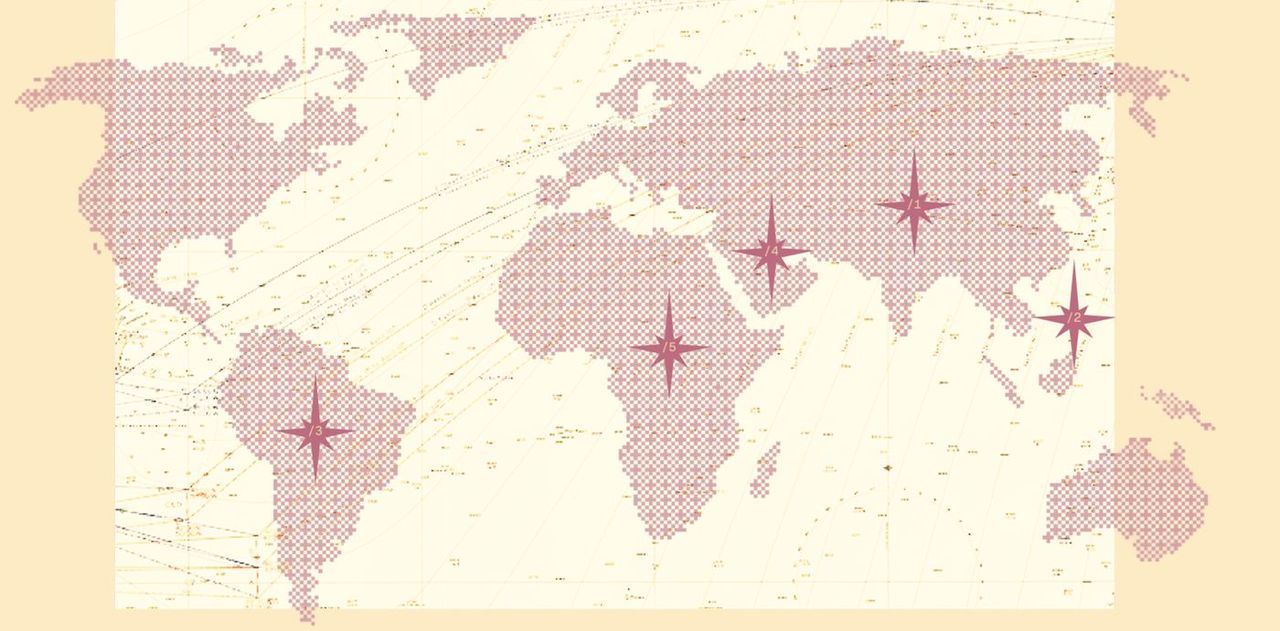
1 /Asia Beyond China
Bangladesh built its textile industry through export processing zones starting in Chittagong in 1983.15 Vietnam has been the recent standout, capitalizing on manufacturing's exodus from China: electronics exports grew from $33 billion in 2014 to $145 billion a decade later.16
2 /The Philippines
When American forces withdrew in the early 1990s, their bases became SEZs. Subic Bay attracted over $1.6 billion in investment from FedEx, Acer, and others, creating 55,000 jobs.17 Neighboring municipalities voted to opt into the Subic Bay Metropolitan Authority, making it one of the few zones with a democratic governance structure.
3 /Latin America
Colombia and the Dominican Republic launched zone programs in 1964 and 1965.18 Free zone exports now represent over 60% of all Dominican exports.19 Costa Rica is the underappreciated story: free zones attracted Intel in the 1990s,20 and the Coyol Free Zone now anchors a medical device industry contributing an estimated 2.67% of national GDP.21
4 /The Middle East
Dubai's success is not a story of oil wealth—it is a story of zone-building.22 The Jebel Ali Free Zone, established in 1985, made Dubai a global transhipment hub. The Dubai International Financial Centre, launched in 2004, went further: a zone subject to codified English commercial law, operating in English, staffed by foreign judges, inside an Arabic-speaking Sharia jurisdiction.23 Its dispute resolution system now competes with London, Paris, and Singapore.
5 /Africa
The continent's record is the most mixed.24 Mauritius launched its program in 1970 and used it to move from sugar into manufacturing and financial services.25 Morocco's Tanger Med, launched in 2007, is now one of the world's best-performing ports.26 Ethiopia built real traction with its industrial park program before its suspension from US market access under AGOA exposed a structural fragility: zones dependent on a single export partner are one policy decision away from collapse.27 The most ambitious current bets are private: Rendeavour's Tatu City in Kenya28 and ARISE IIP's replicable zone models across Togo, Gabon, Benin, Chad, and Rwanda.29
So do special economic zones work?
The empirical literature is messy and the skeptics have real ammunition.30 The Golden Triangle SEZ in Laos, alleged to be a Chinese-run hub for gambling, human trafficking, and the drug trade, is an extreme case,31 but the broader failure rate is still high. Randomized controlled trial evidence from Ethiopia suggests that even industrial park programs celebrated by development institutions and their own governments can deliver weaker income and health outcomes for workers than aggregate investment figures imply.32 Zones dependent on a single export relationship, as Ethiopia's AGOA experience showed, carry a fragility that headline job-creation numbers obscure.33
“The case for SEZs has never rested on the average. It rests on the ceiling.”
The more precise question is what the distribution looks like. Chart the 7,000-odd zones by performance and the result is a power law: a long tail of failures and mediocre industrial parks, a smaller group of solid performers, and at the very top a handful of zones that have bent the economic trajectory of entire nations. The modal zone—a middling industrial park somewhere in Asia or Latin America—is not the right benchmark for evaluating the tool. The 2017 World Bank nightlight study, one of the most comprehensive assessments to date, found that larger zones generally outperform smaller ones—yet restricted its dataset to zones under 1,000 hectares, excluding precisely the kind of ambitious, city-scale projects that generate outsized returns.34 The case for SEZs has never rested on the average. It rests on the ceiling.
The conditions that produce exceptional zones are becoming easier to identify. Zones succeed when they are located near major population centers with genuine connectivity—not deployed to jumpstart peripheral regions that lack the underlying economic activity to sustain them.35 They succeed when private capital and private governance play a leading role, with the government providing the legal framework and stepping back. They succeed when they are ambitious enough in scope to generate agglomeration—a cluster of firms, workers, and suppliers dense enough to create its own gravity: a labor market where specialized workers can change employers without relocating, a supplier base where inputs are locally available, and enough knowledge spillover that the cluster innovates faster than any single firm could alone.36 And they fail, as the African record shows, when they are poorly located, underfunded, or designed to serve political rather than economic ends.37
The context in which these bets are being placed has fundamentally changed. As the postwar order fragments and new powers compete for influence through ports, corridors, and industrial parks, the SEZ is becoming an instrument of geopolitical ambition as much as development policy. DP World's $500 million bet on Somaliland's Berbera, and Ethiopia's pledge to recognize Somaliland in exchange for port access,38 would have been unthinkable a generation ago. But as states like the UAE vie for economic influence abroad, autonomous regions and breakaway territories will increasingly become sites for infrastructure investment anchored by zone frameworks.
High-income democracies are reaching for the tool too. The Trump administration recently announced plans to create a 4,000 acre Economic Security Zone within the Philippines's Luzon Economic Corridor as part of its Pax Silica initiative to secure global supply chains.39 Trump's proposed Freedom Cities40 and the United Kingdom's attempt to revive freeports both reflect that Olson's twin dilemmas are no longer confined to the developing world. The rapid development of AI is adding urgency, fueling novel experiments and attracting capital to jurisdictions that can move faster than legacy institutions allow. Absent a broad shift toward an unambiguous "abundance" mindset across every level of government, the institutional sclerosis Olson diagnosed will continue to compound.
The postwar security umbrella is receding at exactly the moment the demand for faster-moving jurisdictions is accelerating. Greenfield zones and special jurisdictions will be where the most consequential experiments of the next decade are run—the places where big bets can be made, tested, and scaled while existing polities coast on inherited institutions. Most of those bets will fail. A few will not. And the ones that don't will matter enormously.

- 1Enterprise Singapore, “About the Johor-Singapore Special Economic Zone.”
- 2Maccioni, “Dubai’s DP World Says Operations at Somaliland’s Berbera Port Unaffected by UAE Tensions,” Reuters, January 13, 2026.
- 3Comité Stratégique de Supervision du Projet d’Extension de la Ville de Kinshasa, “Kinshasa Kia Mona.”
- 4UNCTAD, “New Global Alliance on Special Economic Zones to Boost Development,” May 17, 2022.
- 5World Bank, “Lifting 800 Million People Out of Poverty,” April 1, 2022.
- 6Krishnan, “The Story of the Dubai International Financial Centre Courts: A Retrospective” (Indiana University, 2018).
- 7Coyol Free Zone, “Costa Rica Free Zone: Life Sciences Hub in Costa Rica.”
- 8Kennard and Provost, “Story of Cities #25: Shannon, Ireland,” The Guardian, April 19, 2016.
- 411748 Anson Map of Baja California and the Pacific, Wikimedia Commons.
- 42Entrance to the Grand Canal, Venice, Wikimedia Commons.
- 9Olson, The Logic of Collective Action (1965); The Rise and Decline of Nations (1982).
- 10Grabow, “Candy-Coated Cartel: Time to Kill the US Sugar Program,” Cato Institute Policy Analysis No. 837, April 10, 2018.
- 11Bertaud, “Cities as Labor Markets,” Marron Institute Working Paper #2, February 19, 2014.
- 43The Flammarion Engraving, The Public Domain Review.
- 12Zeng, ed., Building Engines for Growth and Competitiveness in China (Washington, DC: World Bank, 2010).
- 13Du, The Shenzhen Experiment (Cambridge, MA: Harvard University Press, 2020).
- 14World Bank, “Lifting 800 Million People Out of Poverty – New Report Looks at Lessons from China’s Experience,” April 1, 2022, https://www.worldbank.org/en/news/press-release/2022/04/01/lifting-800-million-people-out-of-poverty-new-report-looks-at-lessons-from-china-s-experience.
- 15Aggarwal, “Performance of Export Processing Zones,” ICRIER Working Paper No. 155, March 2005.
- 16Harvard Growth Lab, “Vietnam: Export Basket,” The Atlas of Economic Complexity.
- 17Mason, “Subic Bay: A Model for Transforming Military Bases into Charter Cities,” Charter Cities Institute, July 12, 2022.
- 18Wong et al., Special Economic Zones: An Operational Review of Their Impacts (Washington, DC: World Bank, 2017).
- 19General Directorate of Customs, Dominican Republic, “Overview of the Dominican Republic’s Free Zone Sector,” WCO News 88, February 22, 2019.
- 20Heilbron, The Impact of Intel in Costa Rica (Washington, DC: MIGA, World Bank Group, 2006).
- 22Krane, City of Gold: Dubai and the Dream of Capitalism (New York: St. Martin’s Press, 2009).
- 24Azuélos et al., “Reassessing the Role of Special Economic Zones in Africa,” AFD Research Paper No. 354, July 2025.
- 25Alter, “Lessons from the Export Processing Zone in Mauritius,” Finance & Development 28, no. 4 (December 1991): 7–9.
- 26Tarek, “Can Morocco Teach Africa How to Build Successful Special Economic Zones?” The Africa Report, December 4, 2023.
- 27Rodríguez-Pose et al., “The Challenge of Developing Special Economic Zones in Africa,” Regional Science Policy & Practice 14, no. 2 (2023): 456–82.
- 28Rendeavour, https://www.rendeavour.com/.
- 29ARISE Integrated Industrial Platforms, https://www.ariseiip.com/.
- 30Yusuf, “It Is Time to Do Away with Special Economic Zones,” Center for Global Development, April 2023.
- 31Serlet, “Golden Triangle: The World’s Worst Special Economic Zone,” Investment Monitor, March 28, 2022.
- 32Blattman and Dercon, “The Impacts of Industrial and Entrepreneurial Work on Income and Health,” American Economic Journal: Applied Economics 10, no. 3, 1–38.
- 33Araya, “Lessons from Ethiopia’s AGOA Suspension amidst US Tariff Uncertainty,” IGC, July 17, 2025.
- 34Wong et al., Special Economic Zones, 2017.
- 36Bertaud, “Cities as Labor Markets.”
- 37Azuélos et al., “Reassessing the Role of Special Economic Zones in Africa.”
- 38Yibeltal, “Ethiopia Signs Agreement Paving Way to Sea Access,” BBC, January 2, 2024.
- 39U.S. Department of State, Office of the Spokesperson, “The United States and the Philippines Launch Plans for 4,000-Acre Economic Security Zone to Shore Up Supply Chains: First AI-Native Industrial Acceleration Hub Under Pax Silica,” April 2026.
- 40Lutter, “Freedom Cities Could Transform U.S. Innovation,” City Journal, February 5, 2025.

About the author
Jeffrey Mason /@JeffJMason
Jeffrey Mason is Head of Policy at the Charter Cities Institute, where he leads technical assistance and advisory projects with governments, special economic zone authorities, and urban developers across Africa, Latin America and the Caribbean, Central Asia, India, and the United States. He is a 2025-26 member of the Africa Policy Accelerator at the Center for Strategic and International Studies and was a judge for fDi Intelligence's 2025 Global Free Zones of the Year awards. His writing and research have been published in The Journal of Special Jurisdictions, Palladium Magazine, Works in Progress, fDi Intelligence, and City Journal, among others. He has degrees in economics from the University of Maryland and George Mason University. You can find him on X at @JeffJMason.