
/feature
Does Europe
Want Europe?
The campaign to give Europe a single corporate standard has reached its moment of truth. One provision in Brussels will decide whether it survives and whether Europe will participate in the 21st century.
Unitree, the Chinese humanoid robotics company, is preparing to go public this year at a pre-IPO valuation of roughly $6 billion.1 It shipped more than 5,500 humanoid robots in 2025. The company's closest American competitor, Figure, reached a $39B valuation last year after shipping about 150.2 If Unitree were an American company, its IPO valuation would seem ludicrously low.
Andreas Klinger, who is running the most serious campaign in a generation to fix European corporate law, uses the comparison as a diagnostic. "It's not that America is the only one that has a functional [capital market]," he says. "It's that it's so disproportionately more powerful. It's five to ten times what anybody else has. You can directly compare BYD to Tesla, or Unitree to others. They're usually bigger and more successful but they have like a fifth of the capital market capitalization."3
Companies in China trade at a structural discount to American firms for many reasons, discussed frequently within this publication. But European firms? What holds Europe's capital markets back from competing with the United States is fundamentally not a question of innovation, regulation, or talent. It's fragmentation.
The United States has a single, unified capital market, one corporate standard, and fifty states that have agreed for over a century to recognize each other's companies. Europe has twenty-seven copies of everything, and they do not always agree on the rules of the game.
Klinger, a founding-team CTO at Product Hunt, then VP of engineering at AngelList, then CTO at On Deck, spent most of his career in San Francisco before moving back to Europe during COVID. The campaign he helps run is called EU-INC. Its goal is to create a common corporate entity standard which makes the European market interoperable for startup founders, with the same documents and rules everywhere. After eighteen months of campaigning by this coalition of European founders and investors, the European Commission published its response, a draft regulation, on March 18, 2026.4 The proposal is now before the European Parliament and the Council, both of which must approve it for it to become law. Several member states, professional guilds, and trade union federations want it watered down or killed. The decisive committee work begins this summer.
"It's not that America is the only one that has a functional [capital market.] It's that it's so disproportionately more powerful. It's five to ten times what anybody else has. You can directly compare BYD to Tesla, or Unitree to others. They're usually bigger and more successful but they have like a fifth of the capital market capitalization."
"If there were a regulation that required you to slaughter a goat to make a company," Klinger says, "a fintech like Commenda would have a slaughter-goat-as-a-service product where it can slaughter a goat in Vietnam for five euros tomorrow—as long as it's for a region that's big enough to justify the effort. I genuinely think ninety percent of what people attribute to regulation stems from fragmentation."
The American conception of Europe—too much regulation, not enough capitalism—produces the wrong prescription. Uniform rules, even strict ones, generate infrastructure: software gets written, lawyers specialize, standard documents propagate. But the reason none of that has emerged in Europe is not that any individual country's rules are unmanageable. It is that no individual market is large enough to serve as a center of mass, and each market has its own rules and norms.
The result is friction so granular that it sounds made-up. A German tax code that requires your dinner companion to countersign your restaurant receipt before the meal counts as a deductible business expense. Twenty-seven different corporate codes, standard investment documents, banking processes, and definitions of what an investor's preferred stock is even called. Collectively they form a brick wall.
Capital hits the same wall as commerce does. By Klinger's estimate, less than 18 percent of early-stage European investing is cross-border. A German angel does not put money into a Polish startup because finding a Polish startup lawyer for a single check is not worth the effort. Even if the angel finds one, the entity structure does not match anything they have seen before. The closing process takes four months. The bank refuses to open an account for a non-resident. Somewhere along the way the angel realizes this is why they should have invested in Munich. They rarely make the same mistake twice.
"It's not that there isn't enough money," Klinger says. "It's that the money can't move." Founders, of course, feel the same wall in reverse.
"If the second country you expand into in Europe is another European country, fine," Klinger says. "If the third country you expand into is still in Europe, you're an idiot. Expand to the US instead. The press picks you up across the whole country."
Europe has done this before
Europe, a continent of 450 million people and 27 member-states, in practice is a much more difficult market than the United States, with its 340 million people and 50 states. The International Monetary Fund has estimated that persistent barriers within the EU single market function as the equivalent of a 110 percent tariff on cross-border services.5 EU-INC proposes to fix that with a single legal entity form, recognized everywhere, with the same standard documents wherever a founder chooses to register. Sound familiar?
"It's not that there isn't enough money [in Europe;] it's that the money can't move."
When Klinger moved back to Europe, the people he found most pessimistic about the continent were Europeans. These were Estonian, Polish, and Austrian founders who grew up on Coca-Cola and NASA, went to Stanford, built companies in San Francisco, and were now back in Europe building for their home countries.
"It's always a French or Austrian or German startup, not a European startup—especially if it's successful. There is no European founder identity. We have to start by building one."
Klinger first tried a private-sector fix. He started building a Stripe Atlas for Europe that would let founders incorporate through a single standardized structure with local subsidiaries spun up as needed. The numbers were promising, but the complexity was punishing. Every country needed separate legal infrastructure, separate banking integrations, separate tax treatment. He realized that a clean product layer over a fragmented legal substrate would merely be a workaround.
Around the same time, Brussels resurrected an older concept: a "28th regime," a standalone European legal code that would sit alongside national corporate law rather than replacing it. Founders could opt in to the European code instead of incorporating under, say, German GmbH or French SARL rules. To seize the moment, Klinger quickly pivoted from product to policy.
EU-INC the campaign launched on October 14, 2024. Its co-initiators included Klinger, Philipp Herkelmann, Simon Schaefer of the Berlin-based incubator Factory, and Vojtech Horna, joined later by Iwona Biernat, Susanne Knoll, Luis Cerqueira Silva of Remote, Marvin Baumann, and Robin Wauters of the European Startup Network.6 The petition gathered 13,000 signatures by year's end and would eventually exceed 24,000—founders of Stripe, Wise, Supercell, Wolt, Bolt, DeepL, Revolut, Pigment, and several others, plus investors from Index, Atomico, Sequoia, Creandum, Seedcamp, and dozens more. Patrick Collison and Paul Graham signed.7 The startup associations of nearly every member state endorsed the cause.
The campaign commissioned legal analyses with Orrick, Bird & Bird, and other top-tier European firms—eighty pages of implementation architecture covering every trade-off and question about how a 28th regime could actually be operationalized. They handed it all to the European Commission. The original pitch was clean: a new legal entity in a new legal code, completely separate from any national corporate law in the same manner the Uniform Commercial Code in the United States is a standard that states adopt rather than a federal statute that overrides them. Countries would compete on speed of incorporation, court quality, digital infrastructure, and English-language documentation. The entity itself would be the same everywhere. Finally, a European Delaware.
Then the political infrastructure caught up. In September 2024, Mario Draghi's landmark report on European competitiveness called explicitly for a "true 28th regime."8 In January 2026, the European Parliament passed a non-binding resolution by 492 to 144 urging the Commission to act.9 On March 18, 2026, the Commission delivered: a formal legislative proposal, COM(2026) 321, establishing the legal form of EU Inc. The European Council endorsed the proposal the next day.10
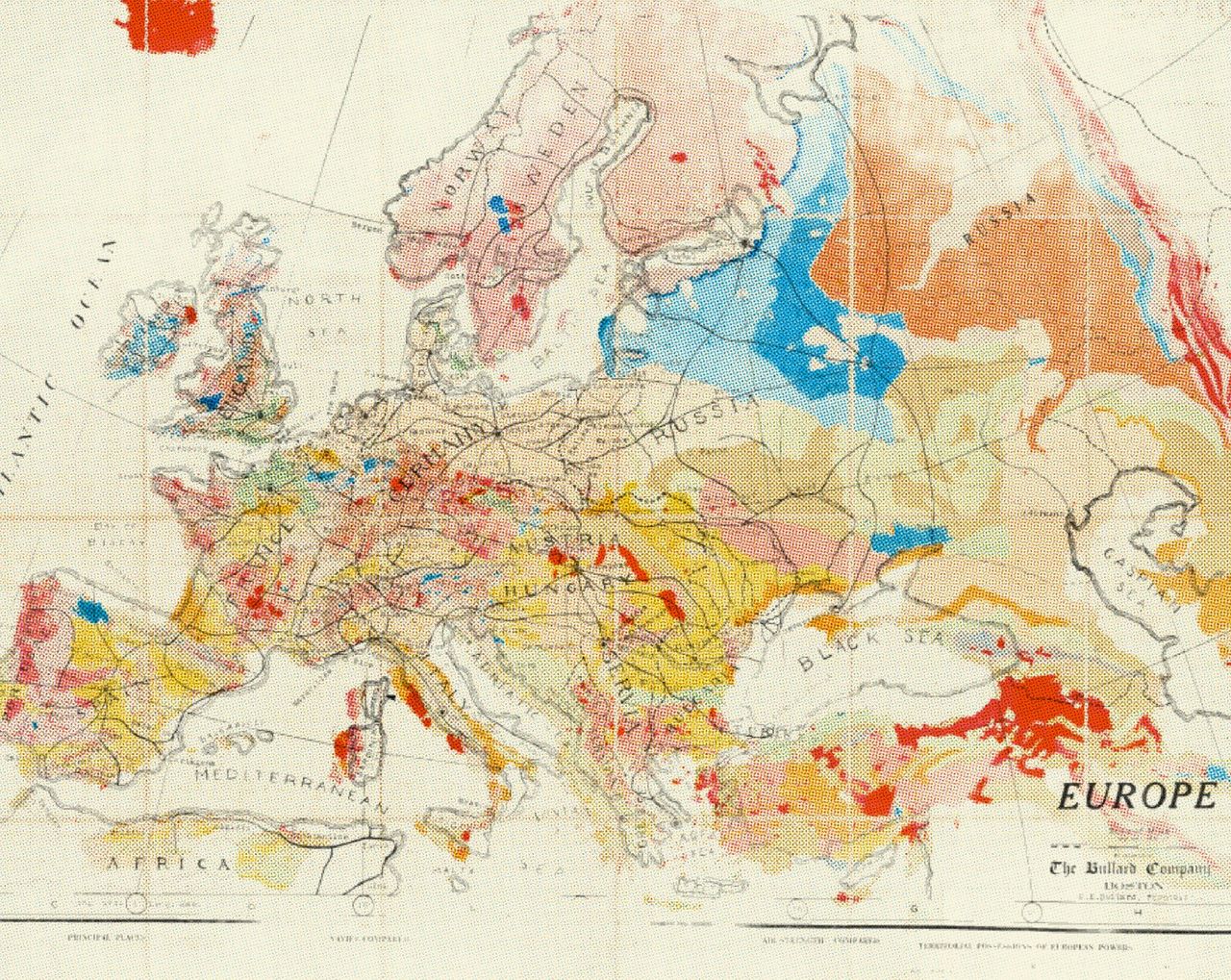
Klinger describes that political process in Europe as "a debate club for countries—it is borderline impossible that anybody gets anything done, and that's by design."
The Commission is now working to create something that can pass, but in the process it is watering down the proposal from its original intent.
EU Inc. rests on three legal concepts: where a company is registered, where its management sits, and where it operates.
Today, the management seat decides everything. If a company's management sits in Germany, the company is German for legal purposes, no matter where it is registered. A founder who registers an entity in Estonia and runs it from Berlin is, on paper, doing something legal, Klinger explains.
Estonia accepts the registration. Germany does not recognize it as meaningful. The German tax authority treats the company as German. German banks refuse to open accounts in the Estonian entity's name. Insurers decline coverage. Every counterparty assumes the structure is a tax-evasion scheme.
The campaign's pitch was a clean break: a new European legal entity governed by a new European legal code, sitting entirely outside national corporate law.
How America got Delaware
The Commission delivered something narrower. The registered office now governs corporate identity—share structure, board, investor protections, standard documents—and member states must recognize it. The German tax authority can no longer redesignate an Estonian EU Inc. as German. German banks can no longer refuse the account. Insurers can no longer decline coverage on registration grounds. The everyday refusals that make cross-border registration functionally impossible today become illegal.
But EU Inc. sits on top of national corporate law, not outside it. Tax stays where the company operates. Labor stays national. Codetermination, accounting, director liability beyond the harmonized core—all of it defers to the law of the registered office.
The redesign is a compromise the Commission made to get the regulation through Article 352 of the Treaty, the single-market clause that allows passage by qualified majority. A fully separate legal code would have required Article 115 and unanimous Council consent. Every previous attempt to pass a 28th regime that route has died there. Tax and labor were excluded for the same reason. The Commission picked the version of EU Inc. it could actually pass.
It is now the single design choice in the proposal that has to hold up for any of the rest to matter.
How much it matters becomes visible in the gap between what European law theoretically permits and what it functionally allows. Klinger points to the seed round of a portfolio company in Hungary—the largest in that country's history—where the local infrastructure simply was not built to handle the company-flip required to make the round investable. "Nobody streamlines Hungarian legal entity creation through software," he says. "Why should you?" Banks balked. Counsel had to be coordinated across multiple jurisdictions. A Swiss LLC-to-AG conversion for another portfolio company has been pending two months and counting. Switzerland is a famously easy place to do business. The overall European infrastructure, however, has just never been sanitized for these kinds of corporate actions, because the volume has not been there to justify the work.
With seat-decoupling intact, things change overnight. Registration becomes a competitive market. Estonia, Ireland, the Netherlands, possibly Luxembourg—the countries that already specialize in fast, digital, English-language incorporation—would compete on the surrounding infrastructure: banking integrations, tax-advisor matching, investor onboarding.
Member-states like Germany with more powerful economies may win on their economic might, but they will need to compete with the smaller, nimbler member-states. This is a tension in all of European politics, and one that cuts to the core of every European political discussion.
A clean incorporation flow on top of the EU Inc. registry could serve every founder on the continent through a single registration. It puts Europe in a better position to seize economic superpower status. It also only works if each country sees itself as "European."
"The EU is a debate club for its countries—it is borderline impossible that anybody gets anything done, and that's by design."
The Commission's proposal is structured as a regulation under Article 114 of the Treaty on the Functioning of the European Union—the single-market harmonization clause.11 A regulation under Article 114 applies directly in every member state, with no national transposition required, and passes by qualified majority. A directive, the alternative the Parliament initially preferred, would have required each country to translate it into national law—the route that produced the patchwork of corporate codes the proposal is meant to replace. An open letter coordinated by Allied for Startups put it bluntly: "a directive is not a 28th regime."12 The Commission picked the stronger instrument, but that meant a narrowed scope.
To win Article 114 viability, the Commission stripped out the hardest harmonization fights. Tax law and labor law are excluded from the proposal entirely. Both areas would have required unanimity in the Council under Article 115, which would have killed the entire regulation. The result is a proposal that harmonizes corporate form, share structure, director duties, employee stock options, and incorporation procedures—but defers tax, labor, and a long list of gap-filling matters to the law of the registered office.13
Indeed this is the original campaign pitch in compromised form: a single corporate standard, registered-office primacy, mandatory recognition by other member states. But dangerously, twenty-seven different bodies of national law are still filling in the gaps. Critics, including Luis Garicano and Ulrike Malmendier of the Oxford Business Law Blog, have warned that the structure could produce "27 different 28th regimes"—a uniform shell wrapped around twenty-seven divergent interpretations.14 The closest historical parallel, the Societas Europaea, produced only a few thousand registrations in two decades for exactly this reason.15
The proposal is now before two co-legislators. The European Parliament's Committee on Legal Affairs (JURI) heard Commissioner Michael McGrath present the proposal on May 4.16 The Council's Working Party on Company Law has begun technical examination, holding sessions through the spring.17 The Commission's stated target is final agreement by the end of 2026; Council President António Costa has signaled the end of 2027 as a more realistic backstop.
The treaty mechanics
Four fights now sit on top of the proposal.
The first is the notarial guilds.
Articles 67(6) and 59(5) of the proposal explicitly bar member states from requiring notarial deeds for share subscription or transfer in EU Inc. companies.18 In Germany and France, this strips one of the most organized professional lobbies in European corporate law of a captive revenue stream. The provisions would, in one move, eliminate a friction that deters cross-border investors in notary-heavy jurisdictions—and they will be fought hardest.
The second is codetermination.
As one representative example, German labor law gives workers seats on supervisory boards in larger companies. The proposal preserves member-state codetermination rules at the registered office, which means a company registered as an EU Inc. in Estonia is subject to Estonian rules even if its workforce is largely in Germany.19 The European Trade Union Confederation, UNI Europa, and the European Trade Union Institute have called the regime a "social dumping disaster" and warned of "regime shopping"—founders choosing a registration country to escape national labor protections. A full-day European Economic and Social Committee conference held on April 21, 2026, titled "28th Regime: Why Are Alarm Bells Ringing?" was organized to mobilize unions against the proposal.20
The third is tax.
The Commission has been clear that EU Inc. does not change where companies pay tax—a German operation pays German corporate tax regardless of where it is registered. The Parliament's tax subcommittee, FISC, is unsatisfied with this and is pushing for the regime to include tax elements over time: a consolidated corporate tax base, cross-border loss relief, a centralized VAT framework, harmonized stock-option treatment.21 None of this can be added without unanimity, but the Parliament is using its leverage on the corporate-form regulation to force the conversation. The risk is that tax demands either delay the regulation past the 2026 deadline or trigger Council opposition that pulls back the registered-office primacy elsewhere in the text.
The fourth is the gap-filling itself.
Article 4(2) specifies that any matter not explicitly covered by EU Inc. fall under national law.22 The list of "not explicitly covered" matters is long: accounting standards, director liability beyond the harmonized core duties, preventive controls on formation, conditions for fast-track liquidation. Each of these is an opportunity for national law to reassert itself. Each is a place where amendments will be tabled. The narrower the final regulation's positive scope, the more national law fills the gaps, the closer EU Inc. moves toward Societas Europaea's fate. If member states succeed in narrowing registered-office primacy, or if the Parliament demands tax provisions that force the Council to walk back other harmonization, EU Inc. becomes another failed attempt at harmonizing Europe. Founders are still locked into whichever national system they started with. European law even today theoretically permits cross-border registration, but banks and governments make it functionally impossible.
"Europe is so gaslit into being weak and small that the countries individually are more happy if they're the local king of a nothing-land."
"We are now living in a time of giants," says Klinger. "The times of perfect global trade for peace are gone. Now there are big economic blocks, and they use trade between them as a political tool. Europe needs to be a giant if it wants to live in a world of giants. If it doesn't, Europe goes the way of Latin America—some countries become very wealthy, some poor, some democracies, some not. Ultimately all of them are under China and America."
The continent has a GDP estimated at roughly $23 trillion. The bloc's combined manufacturing output is among the largest in the world, comparable to China's.23 Aggregate European military spending is second only to that of the United States, well ahead of China, and multiples of the Russian defense budget.24 The fragments are there but unassembled.
Member states are insulated from competition with each other. France can run a domestic champion in banking, telecoms, energy, and software because the Italian, Polish, and Estonian competitors cannot reach French customers without navigating French legal, banking, and regulatory infrastructure that has been engineered, deliberately or otherwise, to make reaching them difficult. Every member state runs the same protection racket against the others. Fragmentation is not a side effect of European disunity. It is the mechanism that lets twenty-seven domestic incumbents extract rent from twenty-seven captive markets without ever having to face each other directly. A unified market would force French champions to compete with Estonian digital infrastructure, Irish tax efficiency, German manufacturing, Polish labor markets. Many of them would lose. Many of their political backers know it.
"Europe is so gaslit into being weak and small," Klinger says, "that the countries individually are more happy if they're the local king of a nothing-land."
The geopolitical context is making the cost of that arrangement harder to bear. The post–Cold War order in which "the West" meant the United States plus fifty countries is over. The new alignment is bilateral and consolidating. As Klinger sees it, the United States and China have consolidated around their respective leaders, with little (or zero) checks on their power. Russia, conventionally weak (its GDP is roughly half that of Germany) is dangerous primarily because Putin is a single decision-maker who can move its entire economy quickly. Speed and centralized decision-making matters more in this configuration. The countries that can decide things are pulling away from the countries that cannot. Europe in its current form cannot decide things.
EU Inc. will not solve this structural problem. It does not unify capital markets or create a European army. It does not address procurement fragmentation in defense. It is one corporate-law reform. But there is a sense in which the answer to this one question is the answer to all of the big questions for Europe.
European founders and investors have been seeking harmonization for decades. There is no pan-European venture capital without a pan-European corporate standard. There is no pan-European stock market without a pan-European corporate standard. The corporate standard is the predicate. Strip the seat-decoupling clause and the predicate fails. Keep it and the bloc has, for the first time in its modern history, a piece of legal infrastructure that European founders can actually build on.
"This generation has to figure out how much Europe wants Europe."

- 1Sherisse Pham, "China's Unitree heats up humanoid robot race as IPO valuation reportedly hits $7 billion," CNBC, September 9, 2025; KraneShares, "A Complete Guide to Unitree Robotics' 2026 IPO," April 2026.
- 2Coco Feng, "China's Unitree ships more than 5,500 humanoid robots in 2025, surpassing US peers," South China Morning Post, January 19, 2026, citing Omdia. Figure AI shipped approximately 150 humanoid units in 2025, per Omdia.
- 3Andreas Klinger, interview with Spencer Schneier, April 9, 2026. All subsequent Klinger quotations are drawn from this interview unless otherwise noted.
- 4European Commission, Proposal for a Regulation of the European Parliament and of the Council Establishing the 28th Regime Corporate Legal Framework ('EU Inc.'), COM(2026) 321 final, March 18, 2026.
- 5International Monetary Fund estimates cited in European Parliamentary Research Service, "The 28th regime corporate legal framework," Briefing PE 785.710, April 2026.
- 6EU-INC, "Supporters," accessed May 2026, https://www.eu-inc.org/supporters. The campaign's co-initiators are Andreas Klinger, Philipp Herkelmann, Simon Schaefer, Vojtech Horna, Iwona Biernat, Susanne Knoll, Marvin Baumann, Luis Cerqueira Silva, and Robin Wauters.
- 7Romain Dillet, "Founders and VCs Back a Pan-European C Corp, but an 'EU Inc' Has a Rocky Road Ahead," TechCrunch, October 28, 2024.
- 8Mario Draghi, The Future of European Competitiveness, Report to the European Commission (Brussels: European Commission, September 9, 2024), pt. B, 290–93.
- 9European Parliament, "Recommendations to the Commission on the 28th Regime: A New Legal Framework for Innovative Companies," resolution of January 20, 2026, P10_TA(2026)0006. The vote was 492 in favor, 144 against, with 28 abstentions.
- 10European Council, "Conclusions," EUCO 7/26, March 19–20, 2026.
- 11Consolidated Version of the Treaty on the Functioning of the European Union, art. 114, OJ C 326 (October 26, 2012). Article 114 governs single-market harmonization measures and is decided under the ordinary legislative procedure with qualified majority voting in the Council.
- 12Allied for Startups et al., "A Directive Is Not a 28th Regime," open letter, February 2026.
- 13COM(2026) 321, recital 83 (excluding tax and labor law from the scope of harmonization); art. 4(2)–(3) (deferring matters not covered by the regulation to the law of the registered office).
- 14Luis Garicano and Ulrike Malmendier, "Why the 28th Regime Proposal Falls Short of Europe's Challenge," Oxford Business Law Blog, March 19, 2026; Luca Enriques, Casimiro A. Nigro, and Tobias H. Tröger, "Why the 28th Regime Needs a Fallback Plan: The EU Inc Zone," Oxford Business Law Blog, April 3, 2026.
- 15Council Regulation (EC) No. 2157/2001 of October 8, 2001, on the Statute for a European Company (SE), OJ L 294 (November 10, 2001). Only a few thousand SEs have been registered in two decades, and many of those are inactive shells; see European Trade Union Institute, "European Company (SE) Database."
- 16European Parliament Committee on Legal Affairs, "Draft Agenda, May 4–5, 2026," JURI(2026)0504_1; "Dossier on '28th Regime' for Companies Should Be Assigned in Mid-April to Rapporteur," Agence Europe, March 31, 2026.
- 17Council of the European Union, Working Party on Company Law, technical sessions held in late March, April, and through the spring of 2026.
- 18COM(2026) 321, arts. 67(6), 59(5).
- 19COM(2026) 321, art. 12.
- 20European Trade Union Confederation, "28th Regime: Why Are Alarm Bells Ringing?" conference, European Economic and Social Committee, Brussels, April 21, 2026; Corporate Europe Observatory, "A Social Dumping Disaster? EU's '28th Regime' Plans Could Help Corporations Bypass Member State Rules," September 2025.
- 21European Parliament Subcommittee on Tax Matters (FISC), draft own-initiative report, March 2026.
- 22COM(2026) 321, art. 4(2).
- 23EU-27 manufacturing value added in 2024 stood at approximately €2.4 trillion, comparable to China's. See Eurostat, "Manufacturing Statistics," 2024; UNIDO, World Manufacturing Production Quarterly Report, 2024.
- 24Stockholm International Peace Research Institute, "Trends in World Military Expenditure, 2025," fact sheet, April 2026. European military spending in 2025 totaled $864 billion, second only to the United States ($954 billion); China spent $336 billion and Russia $190 billion.
- 25Geological Map of Europe, Archivio Storico del Touring Club Italiano, via Wikimedia Commons.
- 26Map of Europe, Norman B. Leventhal Map Center at the Boston Public Library, via Wikimedia Commons.

About the author
Spencer Schneier /@Spenceraviav
Spencer is the co-founder and CEO of Commenda, the first AI Managed Entity Platform. He spends most of his time thinking about how he can help businesses stay one step ahead of bureaucrats using technology, and how to make it as easy to do business in Brazil as it is to do business in Singapore. Outside of work, he is a passionate husband to his wife Baylee, an avid fan of Liverpool FC, the New York Mets, New York Knicks, and the Green Bay Packers. He also plays chess and likes to read history books. You can find him on X at @spenceraviav.